
Company
Digit, ERP software for manufacturers and distributors
Buyers
Manufacturing and distribution teams evaluating a complex operating system for their business
Industry
B2B
50%+
increase in human demo bookings in the first 30 days after replacing free trial with Hobbes
<14 days
to launch a functional, effective Hobbes agent
2x
fewer noisy free-trial signups and more buyers who were serious about a sales conversation
Digit's free trial gave buyers access to the product, but not the tailored answers serious manufacturing and distribution teams needed. After replacing their free trial with Hobbes, Digit put an agentic guide on its website that learned from buyer questions, made prospects more qualified before sales, and helped increase human demo bookings 50% month over month in the first 30 days.
“
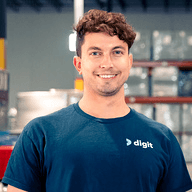
Our goal was not to replace our humans, but make them as busy as possible with as many qualified demos as possible.
CRO, Digit

The problem was not access. It was unguided access.
Digit builds ERP software for manufacturers and distributors. The product is powerful because it touches the real workflows that run an operating business. That also makes the buying journey more complex than a simple signup flow. In the ERP market, buyers often expect the product to stay hidden until a sales call. Digit wanted to push against that.
Simon Kronenberg and the Digit team knew buyers wanted to see the product before committing time to sales, so they tested a free trial path. The trial solved one problem. It gave people access. But it created a different problem. A powerful ERP platform is not something every buyer can understand by clicking around alone.
Serious buyers came with specific questions and capability checklists. They needed to understand whether Digit matched the way their manufacturing or distribution business actually worked.
Free trial did not make that easy enough.
Instead, Digit saw too many low-intent signups from Gmail accounts, student accounts, and people who were unlikely to become customers. Those signups pulled attention from the sales team, while the buyers Digit cared about most still needed guidance before they could make a real evaluation.
As Simon put it, Digit's human demos converted well. The issue was that free-trial conversions lagged by a significant factor and created noise for the AEs. Digit did not need more raw access. They needed a better way to turn product curiosity into qualified buying intent.

Why Digit kept human demos at the center
Digit was not trying to replace its sales team.
The opposite was true. Human demos were working.
Simon wanted to make those sales calls more valuable by sending the right buyers into them with more context.
That distinction matters.
For a complex ERP purchase, the human conversation still carries the deal forward. Buyers need to talk through implementation, fit, stakeholders, and how the product maps to their business. But the first call should not have to start from zero.
Hobbes gave Digit a middle path between a gated sales motion and an unguided free trial. Visitors could explore the product immediately, ask detailed questions, and decide whether a human demo made sense. Sales could then pick up with the buyer's priorities already visible.
The result was not fewer sales conversations. It was more of the right ones.
“
Our goal was not to replace our humans, but make them as busy as possible with as many qualified demos as possible.
CRO, Digit
What changed after Hobbes
Digit swapped Hobbes into the website as an agentic guide and removed free trial as the primary exploration route.
The change showed up quickly.
"Within the first 30 days we saw a 50% month-on-month increase in human demo bookings, which is exactly what we wanted."
Simon also saw lead quality improve immediately. Hobbes reduced the noise from free-trial signups and helped move more serious buyers into human demos.
Just as important, the sales conversation changed.
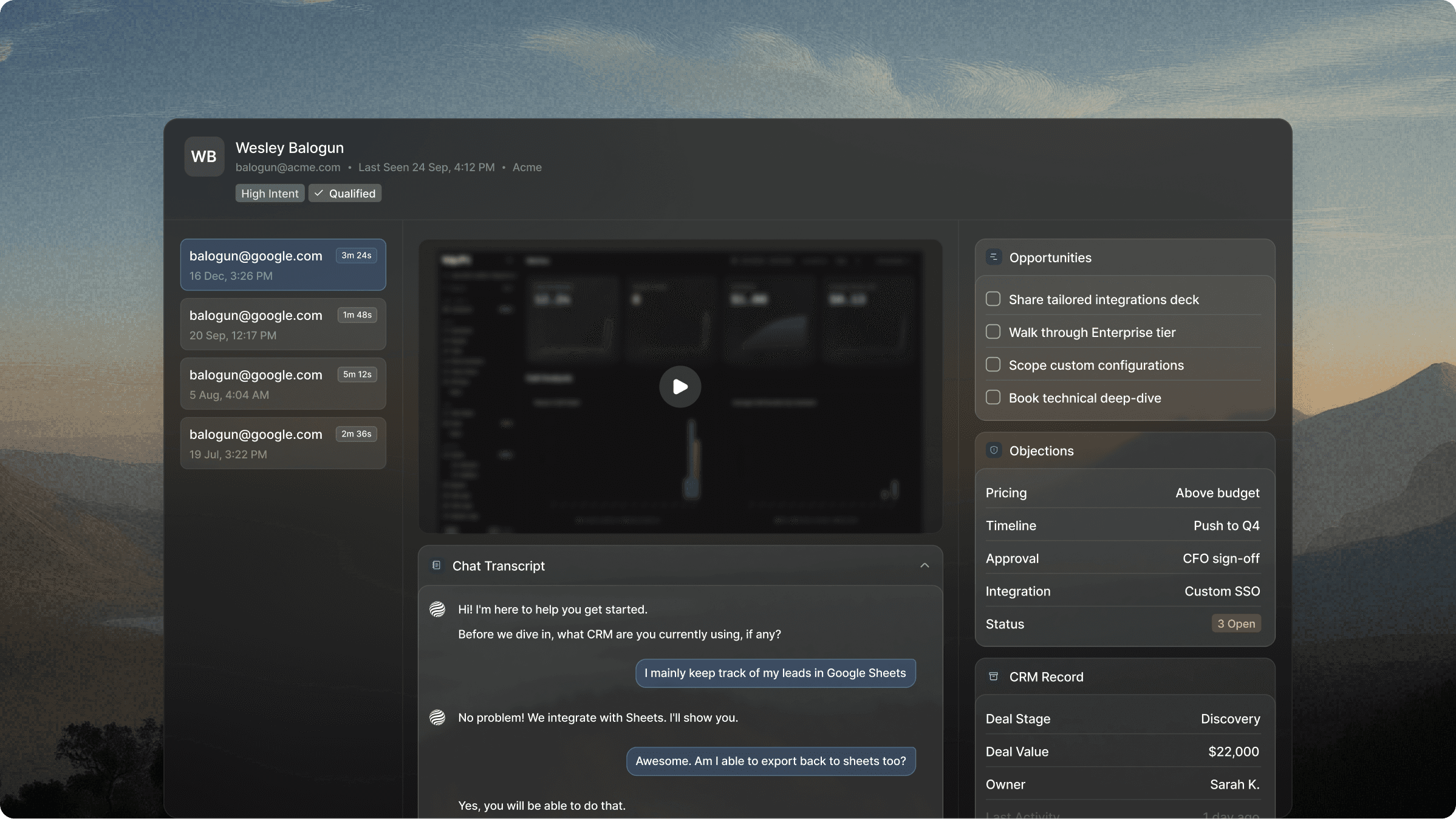
Buyers came into calls more educated because they had already spent time with the Hobbes guide. They had asked their questions. They had explored the parts of Digit that mattered to them. Sales reps could see the buyer's priorities and pick up where the guide left off.
That meant fewer early pre-qualification loops and more time on the questions that move a deal forward.
For marketing, Hobbes opened up a new feedback loop. Digit could see what website visitors were trying to understand before talking to sales. Those questions became input for better marketing pages, better product education, and sharper follow-up.
For sales, Hobbes also helped between calls. In larger deals with multiple stakeholders, not everyone can always attend the same demo. With Hobbes, other stakeholders could still get answers on their own time, and the salesperson could see those conversations in one place.
ERP buyers arrive with a checklist
Digit's buyers do not evaluate ERP casually.
Manufacturing and distribution teams often arrive with detailed capability checklists. They want to know whether the system can support the workflows, edge cases, and operating requirements that matter to their business.
Before Hobbes, that could turn sales demos into a feature-by-feature back and forth.
With Hobbes, buyers could work through that checklist before the sales call. They could ask detailed questions on the website and build confidence that Digit fit the way they needed to operate.
That shifted the live sales conversation.
Instead of spending the first call checking basic capabilities, sales could move toward implementation, value, objections, and the path to closing.
For Digit, that was the point. Hobbes did not just create another website interaction. It turned buyer exploration into an improving system: every question, objection, and checklist item could make the agent and the sales motion smarter.

The surprise: demo bookings went up, not down
One common worry with an agentic guide is that it will reduce demo bookings. If buyers can get answers on the website, will they still talk to sales?
Digit saw the opposite.
After replacing free trial with Hobbes, human demo bookings increased 50% month over month in the first 30 days.
Simon expected Hobbes to improve lead quality. What stood out was that the improved buyer experience also created more human demo demand.
The reason was simple. Hobbes did not block buyers from sales. It helped buyers become ready for sales.
When someone had a real question, Hobbes answered it quickly. When someone wanted to validate a checklist, Hobbes helped them work through it. When someone needed a human conversation, the path to booking was still there.
That made the demo request more informed, not less likely.
"What Hobbes allowed us to do is offer a tailored, effective buying experience to website visitors instead of a generic journey through marketing pages."

The agent keeps improving
Digit also saw value in how Hobbes improves after launch.
The agent gets better as the team adds more knowledge. When Digit publishes a new article or updates its knowledge base, Hobbes can use that information in future buyer conversations.
That creates a useful connection between customer education and sales conversion. The work Digit does to explain its product better does not sit in a static help center. It can immediately improve the way new buyers explore the product.
Hobbes also helps the team learn from buyer questions. If prospects keep asking about a capability, an integration, or an implementation concern, Digit can turn that into better content, better sales training, or better product education.
Simon described that self-improving loop as one of the most exciting parts of the product. The agent did not freeze at launch. It became a living layer between Digit's market, marketing team, and sales team.

Built and launched quickly
Digit wanted to go live quickly.
Hobbes worked with the team to train the agent, connect the right systems, and launch the experience on Digit's site.
The implementation included the website agent, HubSpot and webhook routing, Google Analytics and conversion tracking, source attribution, Slack notifications, and a white-labeled experience at `demo.digit-software.com`.
“
We wanted to go live quickly, and within less than 14 days we were completely up and running with a functional, effective agent.
CRO, Digit
That speed mattered because Digit did not want to spend months building an internal demo layer. They wanted to test the motion, learn from real buyers, and improve with live data.
The team kept tuning the experience after launch. As Digit saw new buyer questions and knowledge gaps, Hobbes could improve the agent and route better context back to the team.
Why it Matters
Free trial is not always the best path for complex B2B products.
For Digit, the issue was not that buyers wanted too much product visibility. The issue was that unguided access did not create the right buying experience. Serious manufacturing and distribution buyers needed tailored answers before they committed time to sales, but the sales team still needed qualified human demos to move deals forward.
Hobbes helped Digit connect those two needs.
Visitors could explore Digit immediately. Buyers could ask detailed questions. Sales could enter the conversation with context. Marketing could see what the market was trying to understand. And every conversation gave Digit another signal to improve the agent, the website, and the human sales motion.
Digit did not replace sales with AI.
Digit used Hobbes to make sales busier with the buyers who mattered.

Experience a Demo
Ready to see Hobbes in Action?
Designed for teams who need control, consistency, and measurable impact across every demo touchpoint.